
Human+ · Living in the Philippines
Moving to the Philippines: A Guide to Making It Home
A practical starting point for expatriates, international families and returning Filipinos: what to prepare, what the rules say, and where to check them.
Research directed by Joel Cordova, CEO, MaidProvider.ph
Chapters (16)
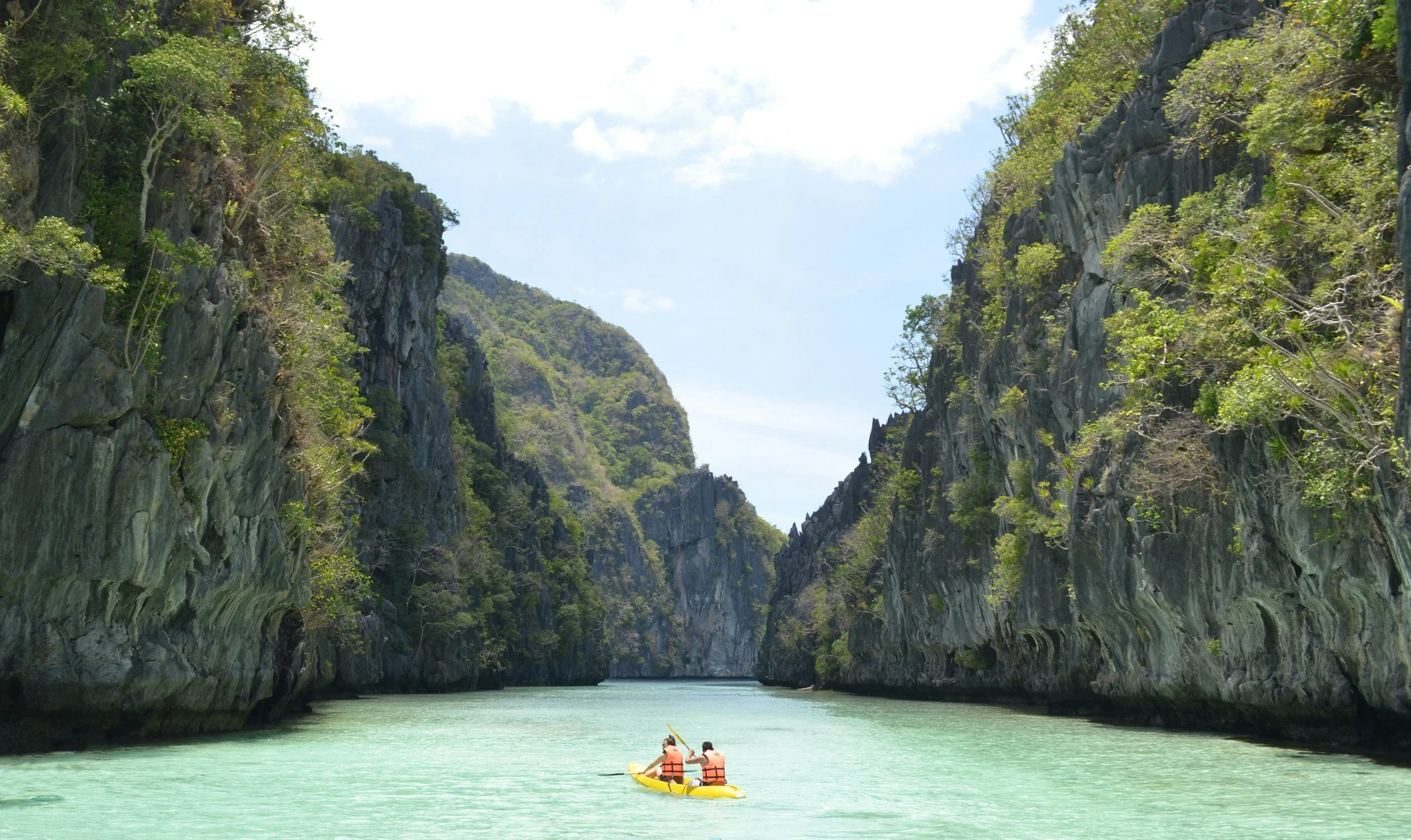
A Philippine beach at midday: limestone islands, a bangka and a nipa hut. Illustration by Human+ for MaidProvider.ph
Moving to another country is rarely just a change of address. It changes how you work, how you raise your children, who you call when something goes wrong, and how you spend an ordinary Tuesday.
The Philippines combines warmth, urban convenience and natural beauty. Settling in still means learning unfamiliar institutions: the Bureau of Immigration, local banks, schools, hospitals and the rules that govern employing people in your home. This guide gathers what matters most in one place and points to the official source behind each rule, so you can check it yourself. Rules do change; where they do, the official source wins.
In short: moving to the Philippines requires planning for immigration status, housing, banking, healthcare, transportation and, for families with children, education. International residents who employ household professionals should also understand Philippine employment law, statutory benefits and regional wage requirements.
Before you arrive
Nationals of most countries can enter without a visa for up to 30 days and can apply to extend their stay at the nearest Bureau of Immigration office. Visa-free entry generally requires a passport valid for at least six months beyond the intended stay and a return or onward ticket, though conditions vary by nationality. Some nationalities have different terms:
- Brazil and Israel. Up to 59 days visa-free under existing agreements.
- India. Up to 14 days for tourism, with confirmed hotel accommodation, proof of financial capacity and a return or onward ticket. Indian nationals holding a valid American, Japanese, Australian, Canadian, Schengen, Singapore or UK visa or permanent residence permit may instead stay up to 30 days for tourism. Neither stay can be extended or converted to another visa. The Bureau of Immigration's Memorandum Circular 2025-003 limits both to tourism; the DFA's e-Visa page also mentions business, so Indian business travelers should obtain a visa or confirm with a Philippine embassy before relying on visa-free entry.
- China. Up to 14 days for tourism or business, entering only through Ninoy Aquino International Airport in Metro Manila or Mactan-Cebu International Airport, with confirmed hotel accommodation and a return or onward ticket. The stay cannot be extended or converted to another visa. The privilege began on January 16, 2026, and on November 23, 2026, the Department of Foreign Affairs extended it through January 15, 2028. It is separate from an older seven-day arrangement for some Chinese tourists holding Australian, Japanese, Canadian, Schengen or US visas.
Others must obtain a visa before traveling. Requirements change, so check the Department of Foreign Affairs' visa policy before you book.
Visa-free or tourist admission does not authorize you to work. Employment requires the appropriate visa or permit, usually arranged through your employer.
Most arriving travelers, including Filipino citizens and foreign nationals, must register free of charge on the official eTravel system within 72 hours before arrival; certain diplomatic and official travelers are exempt. etravel.gov.ph is the only official site, so ignore any service that charges for it.
Returning Filipinos and their families
Under the Balikbayan Program (Republic Act 6768, as amended by Republic Act 9174), eligible balikbayans, including returning Filipino citizens, overseas Filipino workers and former Filipino citizens, may receive visa-free admission for up to one year. Former Filipinos must hold a passport from a country eligible for visa-free entry.
The privilege also extends to eligible foreign spouses and children, regardless of age, provided that they travel together with the qualifying balikbayan and hold passports from countries eligible under Executive Order 408. Family members should carry proof of the relationship, such as marriage or birth certificates. Travelers who do not meet these conditions must comply with the applicable visa and immigration requirements.
Former natural-born Filipinos may also be able to reacquire Philippine citizenship under Republic Act 9225, the dual citizenship law.
For a foreign spouse planning to stay beyond the Balikbayan privilege, the main long-term route is the Section 13(a) non-quota immigrant visa. It begins with a one-year probationary period and is available only to nationals of countries that grant similar privileges to Filipinos. Family-based privileges such as these depend on a marriage or relationship that Philippine law recognizes; couples who are unsure should seek legal advice before relying on them.
If you are staying longer
Temporary visitors who extend their authorized stay beyond 59 days must obtain an Alien Certificate of Registration Identity Card (ACR I-Card); other visa and permit categories have their own registration requirements. Beyond the legal requirement, the card becomes a practical ID: many banks, PhilHealth and other service providers ask for it.
Certain visa holders also have reporting obligations. Registered foreign nationals, other than temporary visitors, must complete an Annual Report with the Bureau of Immigration within the first 60 days of each year, under the Alien Registration Act (Republic Act 562). Leaving can also require clearance: temporary visitors who have stayed six months or more, and visa holders leaving the Philippines permanently, need an Emigration Clearance Certificate (ECC-A), while holders of valid immigrant or non-immigrant visas with a valid ACR I-Card who are leaving temporarily and plan to return need an ECC-B. Apply at least 72 hours before departure.
Extending your stay
Most visitors who entered visa-free can extend their stay with the Bureau of Immigration, at its offices or online through BI e-Services, which handles visa waivers and tourist visa extensions. Extensions are usually granted one or two months at a time, or six months in a single transaction under the Long-Stay Visitor Visa Extension. Total stay is capped at 36 months for nationals who do not need a visa to enter and 24 months for those who do; after that, you must leave the country. The 14-day visa-free stays for Indian and Chinese nationals, and India's 30-day stay, are excluded: they cannot be extended. Apply before your authorized stay ends.
Long-term visas
Staying for years rather than months requires a long-term visa. Each of the following is administered by the Bureau of Immigration unless noted:
- Work. The 9(g) pre-arranged employment visa normally follows an Alien Employment Permit from the Department of Labor and Employment (DOLE), which the employer applies for; DOLE and the Bureau of Immigration share data to process the two together. Short assignments of up to six months use a Special Work Permit instead.
- Marriage. The Section 13(a) visa for spouses of Filipino citizens, described above.
- Retirement. The Special Resident Retiree's Visa, with its deposits and fees, in section 14.
- Investment. The Special Investor's Resident Visa (SIRV) requires an investment of at least US$75,000 in a qualifying Philippine enterprise. The Board of Investments evaluates applications and the Bureau of Immigration issues the visa, which allows indefinite residence while the investment is maintained; a spouse and unmarried children under 21 may receive the same visa.
- Study. Student visas and Special Study Permits, in section 06.
- Remote work. Executive Order 86 (2025) authorizes a Digital Nomad Visa for people aged 18 or older who work remotely for employers or clients outside the Philippines, with proof of foreign income, health insurance for the visa period and a clean record. It lasts up to one year, can be renewed, does not permit local employment, and is limited to nationals of countries that offer a similar visa to Filipinos. Check the DFA e-Visa portal to see whether applications are open.
Pets and belongings
Dogs and cats need an approved Sanitary and Phytosanitary Import Clearance (SPSIC) from the Bureau of Animal Industry before they travel. Apply well ahead: new documentary and health requirements, including rabies antibody testing, take effect on January 1, 2027.
Returning Filipinos, overseas Filipinos coming to settle and returning overseas Filipino workers may bring personal and household effects free of duty within limits set by the Bureau of Customs. Other imports are generally dutiable, so foreign nationals should check which exemptions, if any, apply to their visa category before shipping.
Sources (20)
Bureau of Immigration · DFA, visa policy · Philippine News Agency, extension of visa-free entry for Chinese nationals (November 24, 2026) · Philippine Embassy in Tokyo, visa-free entry under E.O. 408 · eTravel FAQ · Bureau of Immigration FAQs · DFA, Balikbayan privilege · DFA, Section 13(a) visa · Bureau of Immigration, ECC · Bureau of Immigration e-Services (Annual Report) · Bureau of Animal Industry, pet import · Bureau of Customs, duty-free privileges · Philippine Consulate General New York, Balikbayan privilege · BI e-Services · DFA, Long-Stay Visitor Visa Extension · Executive Order 86 (Digital Nomad Visa) · DOLE–BI data-sharing agreement (AEP and 9(g)) · Board of Investments, SIRV FAQs · Board of Investments, Probationary SIRV information sheet (June 2026) · DFA, SIRV requirements
Finding somewhere to live
Most international families in Metro Manila choose between Makati, Bonifacio Global City in Taguig, Ortigas and Alabang, usually based on where they work and which school their children will attend. International School Manila and The British School Manila are both in Bonifacio Global City; Brent International School Manila is in Biñan, Laguna, south of Alabang; and the German European School Manila is in Parañaque. Outside the capital, Cebu, Clark, Subic, Iloilo and Davao each offer a different pace and cost of living. Visit at the hours you will actually travel: in Metro Manila, the commute shapes daily life more than almost any other factor.
Renting
As a reference point, Colliers reported that rents in selected prime and grade A condominium projects in Metro Manila averaged ₱706 per square meter a month in the third quarter of 2026. That is a benchmark for upscale condominiums in the capital, not an average for all housing in Metro Manila or the rest of the country. At that rate, a 100-square-meter unit would rent for about ₱70,600 a month. Asking rents vary by building, size and location, so confirm whether association dues and parking are included.
Leases are commonly for one year, with a security deposit and rent paid in advance. Before you sign, confirm that the person signing is the owner, through the title or condominium certificate of title, or an agent with written authority. Agree in writing on the deposit and how it will be returned, who pays association dues, utilities and repairs, and the terms for leaving early. Sign an inventory of the unit's contents and condition, with dated photographs, on the day you move in.
Rent control applies only to residential units renting for ₱10,000 a month or less, and for 2026 limits increases for a continuing tenant in such a unit to 1%. Most expatriate leases fall outside this threshold, so annual increases are set by the lease, within the general requirements of Philippine law; negotiate them before you sign.
Buying
Foreign nationals are generally prohibited from owning land in the Philippines, subject to limited legal exceptions such as hereditary succession; former natural-born Filipino citizens may qualify for specific land ownership rights. Foreign nationals may buy condominium units in qualifying developments, subject to the 40% foreign ownership limit under the Condominium Act (Republic Act 4726). Seek independent legal advice before signing, and be wary of anything that promises a way around these limits. Foreign investors with registered investment projects may lease private land for up to 99 years in aggregate under Republic Act 12252 (2025); the law is designed for investment projects, not for a family home.
The cost of everyday life
Living costs vary considerably by location, housing and lifestyle. A family living in a central Metro Manila condominium, sending children to an international school and using private healthcare will spend very differently from one in a provincial city using local schools. Build your recurring budget from these lines rather than from averages:
- Rent and association dues
- Electricity (air-conditioning is usually the largest variable), water and internet
- School tuition, fees, uniforms and transport
- Health insurance and out-of-pocket medical costs
- Groceries, especially imported goods, which cost noticeably more
- Transport: ride-hailing, a car and driver, or both
- Household employment: salary, statutory contributions and 13th-month pay (see section 09)
Budget separately for one-time costs: the security deposit and advance rent, school application and new-student fees, visa and ACR I-Card fees, shipping, and furnishing.
We do not publish a single "cost of living" figure: published averages hide the choices that matter most, such as the building, the school and how much air-conditioning you use. Instead, the reference costs below come from published, dated sources, so you can add up your own budget.
| Item | Published figure (November 2026) |
|---|---|
| Condominium rent | About ₱706 per square meter a month, the third-quarter 2026 average for selected prime and grade A projects in Metro Manila only (Colliers); about ₱70,600 for 100 square meters |
| Electricity | ₱15.5510 per kilowatt-hour for a typical Meralco household (Meralco, November 2026); every 100 kWh costs about ₱1,555 |
| Home fiber internet | From ₱1,299 a month for 100 Mbps, or ₱1,699 for 500 Mbps (PLDT Fiber Unli), before installation fees and promotions |
| International school | US$15,160 plus ₱479,600 a year for kindergarten to Grade 4 at International School Manila, plus one-time fees for new students (ISM fees, 2026–27) |
| Household worker | ₱7,800 a month statutory minimum in Metro Manila; MaidProvider.ph recommends starting at ₱14,000 (see section 09) |
Banking and money
There is no legal bar to a foreigner opening a Philippine bank account, but each bank sets its own documents. BPI opens deposit accounts with one valid ID and accepts the ACR I-Card, the Philippine National ID issued to resident aliens or a foreign passport; UnionBank requires a passport from foreign clients; and BDO's foreign-client desk asks for a passport together with an ACR I-Card or Immigrant Certificate of Registration. Most banks also ask for proof of a Philippine address. Until you have an ACR I-Card, plan on using an international card and a multi-currency account.
Banks can also hold US dollar and other foreign currency deposits under the Foreign Currency Deposit Act (Republic Act 6426), which keeps them confidential, and most send and receive international wire transfers. Compare the fees and exchange rate a bank or money-transfer service quotes on the full amount before you move larger sums, and use only providers supervised by the Bangko Sentral ng Pilipinas, the central bank.
Once you have a local account, everyday life runs heavily on digital payments, QR codes and e-wallets. Treat unsolicited calls, texts and links about your account as fraud by default: banks will not ask for your password or one-time PIN.
Taxes
Philippine income tax depends on citizenship, residence and length of stay. Filipino citizens living in the Philippines, including returning Filipinos and dual citizens once resident, are taxed on income from all sources. Foreign nationals are taxed only on Philippine-source income, and pay for work performed in the Philippines generally counts as Philippine-source even when an employer abroad pays it. That income is taxed according to your classification:
- Resident aliens, and nonresident aliens engaged in trade or business in the Philippines, pay the graduated rates. A nonresident alien who stays more than 180 days in a calendar year is deemed to be doing business in the Philippines. Under the graduated rates, since 2023, annual taxable income up to ₱250,000 is exempt, with rates rising from 15% to 35% on income above ₱8 million.
- Nonresident aliens not engaged in trade or business generally pay a final tax of 25% on gross Philippine-source income, without the ₱250,000 exemption. A stay of 180 days or less does not by itself place you in this group: what you actually do in the Philippines also counts.
Tax treaties between the Philippines and many countries can reduce or eliminate Philippine tax on some income, subject to each treaty's conditions, and your home country may tax you as well. Seek professional tax advice before you move.
Sources (8)
Bureau of Internal Revenue, National Internal Revenue Code (Sections 23 and 42) · Supreme Court, CIR v. Baier-Nickel, G.R. No. 153793 (2006) · BIR income tax schedule from 2023 (via PIA) · BPI, account opening requirements · UnionBank, valid IDs · BDO, foreign-client account opening · PwC Worldwide Tax Summaries, Philippines residence rules · Republic Act 12214 (2025), amending Section 25 of the Tax Code
Healthcare
Metro Manila and the larger cities have well-equipped private hospitals, such as St. Luke's Medical Center, Makati Medical Center and The Medical City, alongside public hospitals. In our experience, private hospitals often ask for payment or a guarantee before a planned admission, so many expatriate families carry international or local private health insurance.
Emergency care and hospital deposits. Under Republic Act 10932, which strengthens the Anti-Hospital Deposit Law, hospitals and clinics may not demand a deposit or other advance payment as a condition for emergency care. A patient in an emergency must be treated and stabilized first, and may be moved to another facility only after that, with consent where it can be given. The law does not make care free: you remain responsible for the bill, and hospitals may still ask for payment before non-emergency treatment.
Health insurance for expats in the Philippines
Expatriate households can combine three layers of coverage: PhilHealth, the national program; a Philippine health maintenance organization (HMO) or local health insurance plan; and, where it is needed, international private medical insurance. They are different products, and the differences become clear at a hospital's admissions desk.
- Comprehensive medical insurance pays for treatment, either by reimbursing you or by settling directly with the hospital, up to an annual or per-condition limit. International versions cover you across borders.
- HMO coverage is prepaid care inside an accredited Philippine network. For covered services, usually with the HMO's authorization, you present a card instead of paying up front, subject to the plan's exclusions and a maximum benefit limit, usually per illness per year.
- Prepaid healthcare cards are fixed-term, limited products, often for consultations, emergency room visits or a single confinement. They are a stopgap, not primary coverage.
- Critical illness insurance pays a lump sum on diagnosis of a listed illness. It does not settle hospital bills and does not replace medical coverage.
Can foreigners get health insurance in the Philippines?
Yes. Foreign residents can use each of the types above, as well as PhilHealth if they hold a valid ACR I-Card or are registered with the PRA. Whether a particular product will accept you depends on the provider, your age, your immigration status and, for insurance, underwriting. International insurance is not essential for everyone; when it makes sense is set out below.
PhilHealth for foreign residents
Foreign nationals residing or working in the Philippines with a valid ACR I-Card may join PhilHealth. Employed foreigners are registered through their employer and contribute through payroll. Retirees registered with the Philippine Retirement Authority enroll through the PRA with their Special Resident Retiree's Visa. Other foreign residents submit the PhilHealth Member Registration Form for Foreign Nationals at a Local Health Insurance Office.
In its 2017 circular, PhilHealth set annual premiums of ₱15,000 for PRA retirees and ₱17,000 for other foreign residents, payable quarterly, semi-annually or annually. These are historical rates: we have not confirmed that they still apply, so check current contributions with PhilHealth before paying. PhilHealth pays a fixed amount per case at accredited facilities, so a balance usually remains at private hospitals. Treat PhilHealth as a contribution toward a hospital bill, not as complete coverage.
Philippine HMOs and local insurers
HMOs such as Maxicare, MediCard, PhilCare and iCare sell individual and family plans that pay accredited hospitals and clinics directly for covered care, usually after the HMO authorizes it and within the plan's exclusions and benefit limits. They are often the most affordable way to pay for everyday care in the Philippines. Entry ages commonly stop at about 60, and pre-existing conditions are often excluded in the first year or capped.
Acceptance for one product does not establish eligibility for every plan from the same provider. Before you pay, ask in writing whether your nationality and visa are accepted, whether an ACR I-Card is required, whether membership continues if your visa category changes, and whether the plan covers hospital stays, outpatient care or only emergencies.
Local insurers sell medical insurance as well: AXA Philippines and Pacific Cross, formerly Blue Cross Insurance and a different company from Blue Cross Blue Shield Global Solutions, offer policies with worldwide coverage. Life insurers such as InLife and Sun Life sell plans that pay cash on diagnosis or during a hospital stay rather than settling the bill. Check what each product pays, and how, rather than assuming from the company name.
International private medical insurance
International insurers design plans for people living outside their home country. The policy follows you if you move, can cover planned treatment abroad, and typically includes or offers medical evacuation and repatriation. Most let you choose worldwide coverage, or worldwide excluding the United States at a lower premium; if you expect treatment in the US, including during visits home, check which you are buying.
Availability depends on your country of residence and sometimes your nationality, so confirm at the quote stage that the policy will be issued to you as a resident of the Philippines.
A familiar international brand does not tell you who issues the policy. Some plans sold here are underwritten by Philippine insurers and others abroad, and an overseas insurer is not necessarily licensed by the Insurance Commission. Before you buy, identify the issuer, the governing law, how claims are paid and which regulator would hear a complaint. The Commission publishes lists of licensed HMOs, insurance companies and brokers, dated October 31, 2026.
Compare providersA buying checklist, documents to have ready, and a shortlist of 11 providers with published evidence of serving foreign residents
What to check before you buy
- Hospital acceptance. Ask the hospitals you would actually use whether they accept your insurer and bill it directly, or whether you pay first and claim later. A guarantee of payment arranged before a planned admission avoids most deposits.
- Outpatient care. International plans often cover hospital care as standard and sell outpatient coverage as an option; HMOs generally include consultations.
- Maternity. Usually subject to a waiting period, which can be a year, and sometimes offered only on higher plan levels. Buy well before planning a pregnancy.
- Children. Check newborn enrollment, vaccinations and well-child visits, and the age at which children must move to their own policy.
- Dental. Usually an add-on with its own limits.
- Pre-existing conditions. Policies handle them through full medical underwriting, a moratorium that covers a condition only after a symptom-free period, a waiting period, or not at all. Declare everything: nondisclosure can lead to a denied claim, a canceled policy or other consequences under the contract.
- Evacuation and repatriation. Check whether it is included, its limit, and where you would be taken.
- Coverage area. Worldwide, worldwide excluding the US, or the Philippines only, and any limit on time spent abroad.
What HMOs publish for foreign applicants
Few HMOs publish a rule for foreign applicants. Of those we reviewed, only Maxicare's own documents address them:
- Maxicare. Its Customer Information Form asks foreign individuals for a passport or ACR number, and its PRIMA Access prepaid card accepts the Alien Certificate of Registration or a passport as ID. PRIMA Access covers consultations at Maxicare clinics, not emergencies or hospital stays. These documents show that Maxicare accepts foreign customers, not that every MyMaxicare plan is open to them.
MediCard, PhilCare, iCare and Intellicare do not publish a rule for foreign applicants, so they are not in the comparison below. That does not mean they refuse foreign residents: ask each in writing whether your nationality and visa are accepted for the specific plan.
International insurers with Philippine-specific information
Five international insurers publish Philippine-specific information. Cigna Global has a page for expatriates living in the Philippines; Now Health offers its WorldCare plans to people moving to and working there; William Russell sells to expatriates in the Philippines, though not to Filipino citizens; LUMA lists the Philippines among the eligible countries of residence for its Expat Exclusive plan; and APRIL International sells MyHEALTH Philippines, which it says is open to Filipinos, permanent residents and foreigners. Blue Cross Blue Shield Global Solutions serves qualifying US citizens and residents living abroad.
How to read foreign-national eligibility
- Foreign applications supported
- The provider's own material accepts foreign applicants for the product or application route shown.
- Foreign-resident documents recognized
- The provider asks for or accepts foreign-national documents, such as a passport or ACR I-Card, but has not published full eligibility for the product.
- Conditional eligibility
- Acceptance depends on country of residence, nationality, an employer's agreement or underwriting.
- Not publicly disclosed
- We found no published rule for the product. This does not mean foreign applicants are refused.
| Provider and product | Type of coverage | Foreign national eligibility | Residency and visa | Age | Hospital network | Direct billing | Inpatient and outpatient | Pre-existing conditions | Website and inquiries |
|---|---|---|---|---|---|---|---|---|---|
| National program | |||||||||
| PhilHealth | National social health insurance | Foreign applications supported. Foreign nationals residing or working in the Philippines | Valid ACR I-Card; PRA retirees enroll with their SRRV through the PRA | No entry age limit published | PhilHealth-accredited hospitals and facilities | Benefit deducted from the bill at discharge; the balance is paid by you or your other coverage | Inpatient case rates and selected outpatient packages, in the Philippines only | No pre-existing condition exclusion; for foreign members the 2017 circular excluded Z Benefit packages, the special maternity privileges for women about to give birth, and confinement abroad | philhealth.gov.ph |
| Philippine-based insurers and HMOs | |||||||||
| AXA Philippines, Global Health Access | Philippine-issued international medical insurance, yearly renewable | Not publicly disclosed. Neither AXA's product page nor PSBank's states a rule for foreign applicants. Ask AXA which visas it accepts | Ask whether an ACR I-Card or resident visa is required: Not published | Entry age: 15 days to 70 years; renewable up to age 99, according to PSBank, an official AXA distribution partner. Confirm current eligibility with AXA. | Worldwide; AXA cites cashless access to more than 2 million providers | Cashless at accredited providers | Worldwide medical coverage up to ₱175 million; benefit details by plan: Not published | Not published | axa.com.ph |
| Maxicare, MyMaxicare | HMO, individual and family plans | Foreign-resident documents recognized. Maxicare's Customer Information Form asks foreign individuals for a passport or ACR number. That shows Maxicare accepts foreign customers, not that every MyMaxicare plan is open to them; the plan page states no rule for foreign applicants | Passport or ACR number on the Customer Information Form; visa requirements: Not published | Not available to applicants above 60 | Nationwide affiliated hospitals and clinics, including Maxicare Primary Care Clinics | Cashless at affiliated facilities; emergency care elsewhere partly reimbursed | Inpatient, with a maximum benefit limit of ₱100,000 to ₱250,000 by plan; consultations and diagnostics; emergency abroad up to ₱30,000 per availment | Not published | maxicare.com.ph · plan estimate · +63 2 8582 1900 |
| Pacific Cross (formerly Blue Cross Insurance), Blue Royale | US-dollar worldwide medical insurance; portfolio held by Paramount Life & General Insurance Corporation since December 2025, under the Pacific Cross brand | Not publicly disclosed. For Blue Royale. Pacific Cross separately sells Worldwide Elite-Inbound, travel insurance for non-residents and expatriates visiting the Philippines for up to 180 days, which is not a substitute for annual medical insurance. It also offers Vanguard for US military veterans residing in the Philippines | Not published | Coverage from infancy through age 100, with a separate application from age 71; applicants normally need no physical exam. Maximum age for new applicants and for renewal: Not published | Accredited Philippine facilities; your choice of provider worldwide | Cashless at accredited hospitals or reimbursement | Current product page: up to US$2 million a year; emergency medical evacuation, repatriation, and maternity and childbirth in core benefits. Plan-level outpatient, dental, waiting periods and limits on time abroad: Not published | Current product page: declared pre-existing conditions may be covered immediately, subject to underwriting | pacificcross.com.ph · client_services@pacificcross.com.ph |
| Prepaid healthcare cards | |||||||||
| MaxiHealth PRIMA Access, distributed by Maxicare | Prepaid consultation card | Foreign-resident documents recognized. Accepted IDs include the Alien Certificate of Registration, for foreign nationals in the Philippines, and the passport | ACR I-Card or passport accepted as ID; visa rules: Not published | Open to all ages | Maxicare Primary Care Clinics | Card presented at the clinic with a valid photo ID | Unlimited consultations at Maxicare clinics; emergencies and hospital admission excluded; personal accident coverage up to ₱50,000 | Not published | maxicare.com.ph |
| International private medical insurers | |||||||||
| APRIL International, MyHEALTH Philippines | International medical insurance issued in the Philippines: underwritten by Paramount Life & General Insurance Corporation, arranged and administered by APRIL Singapore | Foreign applications supported. APRIL says the plan is open to Filipinos, permanent residents and foreigners | Not published | Not published | APRIL cites cashless access to hospitals worldwide and 4,500 medical facilities in Asia | Cashless at network facilities; process: Not published | Hospital and surgery limits of US$100,000 or US$500,000 (Essential), US$1 million (Extensive) and US$2 million (Elite); optional outpatient, maternity, and dental and optical modules; evacuation and repatriation up to US$1 million; worldwide, worldwide excluding the USA, or ASEAN excluding Singapore; annual hospital deductible from nil to US$10,000 | Full medical underwriting | april-international.com · quote form · +63 2 8626 3151 |
| Cigna Global | International private medical insurance | Conditional eligibility. Cigna Global has a dedicated page for expatriates living in the Philippines; each policy depends on the quote, residency and underwriting | Country of residence declared at quote | From 18; no upper age limit on application or renewal | Global provider network | Direct billing for most inpatient and day-patient treatment at network providers; prior authorization required for all inpatient and day-patient treatment | Inpatient core; optional outpatient, evacuation, vision and dental modules; Silver, Gold and Platinum hospital limits of US$1 million, US$2 million and paid in full; worldwide, with or without the USA; a Close Care plan covers only your country of residence and nationality | Depends on the underwriting option chosen: Not published | cignaglobal.com · customer guide |
| LUMA, Expat Exclusive | International medical insurance for expatriates in South and Southeast Asia, arranged by LUMA with partner insurers; the issuing insurer is not named on the product page | Foreign applications supported. For expatriates living outside their country of nationality; not available in your home country | At least 185 days a year in eligible countries, which include the Philippines | Up to 70 at application; children under 18 apply with a parent; LUMA states lifetime renewability | LUMA partner hospitals and clinics | Direct billing at partner hospitals and clinics | Inpatient US$1 million (Plan 1) or US$1.6 million (Plans 2 to 4); outpatient on Plans 3 and 4; maternity, dental and vision on Plan 4; evacuation and repatriation listed, limits: Not published; zones exclude the USA, with emergency coverage elsewhere up to US$250,000 a year | Full medical underwriting; terms in the policy wording | lumahealth.com · +66 2 494 3600 · hello@lumahealth.com |
| Now Health International | International private medical insurance; WorldCare plans at four levels: Essential, Advance, Excel and Apex | Foreign applications supported. Now Health's Philippines page offers its plans to people moving to and working in the Philippines | Not published | Not published | Not published | Not published | Annual limits of US$3 million (Essential), US$3.5 million (Advance), US$4 million (Excel) and US$4.5 million (Apex); inpatient and day-patient care, outpatient care, routine dental and routine maternity listed for the Philippines; plan comparison lists evacuation and repatriation, cancer treatment and chronic-condition maintenance | Not published | now-health.com · quote · WhatsApp +852 2279 7322 |
| William Russell | International private medical insurance; policies underwritten by AWP Health & Life SA, an Allianz group insurer, through William Russell Europe SRL in Belgium; William Russell Limited is regulated by the UK Financial Conduct Authority | Foreign applications supported. Sells to expatriates in the Philippines; Filipino citizens cannot buy a policy but can be added as dependents | Generally, at least six months a year outside your country of nationality | New members up to 75; no age limit on renewal | Your choice of provider; coverage throughout the Philippines | Cashless outpatient treatment on all plans except Bronze | Annual limits of US$1.5 million (Bronze, Silver Lite), US$2.5 million (Silver) and US$5 million (Gold); childbirth and routine maternity on Gold only; emergency evacuation standard; zones from worldwide, with restricted US coverage, to Southeast Asia only; annual deductible ("excess") options from nil to US$5,000 | Not usually covered; a medical questionnaire may lead to exclusions or a higher premium | william-russell.com · quote |
| For US citizens and residents | |||||||||
| Blue Cross Blue Shield Global Solutions (formerly GeoBlue), Worldwide Premier and Outside U.S. | International private medical insurance (US-based) | Conditional eligibility. US citizens and permanent residents living abroad, aged 74 or younger at application; foreign nationals legally resident in the US may apply from the US. Other applicants living in the Philippines: Not published | Must live outside your home country at least three months a year | Applicants 74 or younger at application; buyers 18 or older; renewal age: Not published | Global provider network; Worldwide Premier includes US in-network and out-of-network benefits | Many network providers bill the plan directly; direct payment can be requested | Inpatient; preventive care, office visits, urgent care and outpatient mental health; evacuation, repatriation and return of remains up to US$250,000; Worldwide Premier includes the US, while Outside U.S. excludes it, with an optional limited US-visits benefit | Medically underwritten: applications may be accepted, accepted at a higher rate or declined. Current conditions covered immediately with a prior insurer's letter showing at least six months' coverage; otherwise a waiting period of up to six months, shortened by prior coverage | bcbsglobalsolutions.com · +1 610 263 0308 |
Do you really need international health insurance?
Not always. A Philippine HMO, together with PhilHealth and an emergency fund, may be enough for a younger, healthy household that plans to stay, uses hospitals in Metro Manila, Cebu or Davao, and could pay for a hospital stay above the plan limit. International coverage is worth considering if you would want treatment overseas for a serious illness, travel often or may relocate again, live far from a major hospital and may need evacuation, are past the entry age for local HMOs, or face costs, such as cancer treatment or major surgery, that a local benefit limit would not cover. Some families combine the two: an HMO for everyday care and an international plan with a higher deductible for major events.
By household
- Families with young children. Compare pediatric and newborn benefits, vaccination coverage and maternity waiting periods, and confirm your pediatrician's hospital is in the network.
- Retirees. Entry ages are the main constraint: many HMOs stop enrolling at about 60, while some international insurers accept older applicants or renew for life; Compare providers lists each one's ages. US Medicare generally does not cover care in the Philippines.
- People with existing conditions. Ask how each condition will be treated before you buy, get the answer in writing, and keep your current coverage until the new policy confirms it.
- Professionals on employer plans. Check whether your spouse and children are covered, what happens to the coverage if the job ends, and whether you can convert to an individual policy.
Insurers, HMOs and brokers. The insurer or HMO issues the policy and pays claims; a broker compares policies from several insurers and is usually paid by commission. Ask a broker which insurers they represent, and read the insurer's own policy wording before signing. Insurers, HMOs and brokers are licensed by the Insurance Commission.
Register with a pediatrician and a family doctor early, before you need one. For a directory of hospitals and emergency contacts, see Help Is Here.
Sources (6)
PhilHealth, coverage for foreign nationals · PhilHealth Circular 2017-0003 · Insurance Commission · Maxicare Customer Information Form · PhilCare FAQ · InLife underwriting announcement (December 2024) · provider websites as listed in the table
Education and international schools
International schools in Metro Manila, Baguio, Cebu and Clark offer American, British, International Baccalaureate (IB) and other curricula. In Metro Manila, International School Manila in Bonifacio Global City offers the IB Diploma and publishes its fees and admissions process online; The British School Manila, also in Bonifacio Global City, follows an adapted English National Curriculum through to the IB Diploma; and Brent International School Manila in Biñan, Laguna, has been an IB school since 1986. The German European School Manila in Parañaque offers German and English-language programs. Outside the capital, Brent International School Baguio has been an IB school since 1982 and offers boarding; Cebu International School, in Cebu City, offers IB programs; and Singapore School Clark is in the Clark Freeport Zone. Fees at the larger schools are substantial: International School Manila lists annual tuition of US$15,160 plus ₱479,600 for kindergarten to Grade 4 in 2026–27, with a US$700 application fee for applications submitted from August 1, 2026, and one-time fees for new students. You can confirm a school's IB authorization on the IB's website.
Places in popular grades fill early, so apply as soon as your move is confirmed, and ask each school about entrance assessments, waiting lists, learning support and the immigration documents your child will need.
Foreign children may require a Special Study Permit (SSP), depending on their immigration status; certain dependent visa holders may study under their existing visa. Schools must be authorized by the Bureau of Immigration to accept foreign students. Confirm the applicable requirements with the school and the Bureau of Immigration before enrollment.
Sources (6)
Bureau of Immigration Operations Circular No. 2024-002 (Special Study Permit process), UP Law Center National Administrative Register · Bureau of Immigration FAQs (dependent visa holders) · Bureau of Immigration e-Services (applications) · International School Manila, school fees 2026–27 · IB, Brent International School Baguio · Cebu International School, admissions
Raising children in the Philippines
Family life is central to Filipino culture. Children are generally welcomed in public spaces, and large malls double as weatherproof playgrounds during the rainy season, with indoor play areas, family restrooms and nursing rooms. Parks such as those in Bonifacio Global City and Ayala Triangle Gardens in Makati offer open space within the city.
Plan for heat and rain. Outdoor activity is easiest in the early morning and late afternoon, sun protection matters year-round, and many families keep a list of indoor options for the typhoon months.
For weekends, the cooler ridge of Tagaytay south of Manila, the beaches of Batangas and the former US base at Subic Bay are popular day or overnight trips. Register early with a pediatrician whose hospital is in your insurance network; the large private hospitals in Metro Manila, Cebu and Davao have pediatric departments and emergency rooms. For day-to-day care, many families use a preschool, a nanny or both; see section 09 on hiring responsibly.
Getting around
Ride-hailing apps, taxis and Metro Manila's rail lines cover most daily trips, and Philippine Airlines, Cebu Pacific and AirAsia Philippines fly between the main cities and islands. In Metro Manila, the LRT-1, LRT-2 and MRT-3 lines accept a stored-value beep card; expressways such as the Skyway, NLEX and SLEX use electronic toll tags; and at the airport, use the official taxi ranks or book a ride-hailing car inside the app rather than accepting offers in the arrivals hall. Many families also hire a driver and use the commute to work or rest. If anyone in your household uses a wheelchair or has other access needs, check buildings, schools, hospitals and daily routes in person before committing; accessibility differs from place to place.
Eligible visitors may generally drive using a valid foreign driver's license for up to 90 days from arrival. A license not in English may need an official translation. If you are staying longer, the Land Transportation Office (LTO) converts valid foreign licenses at its licensing offices. Bring your passport showing your arrival; under the LTO's conversion guidelines, applicants whose foreign license has expired must pass written and practical exams.
Establishing your household
Many international families employ household professionals: maids, nannies, cooks, gardeners, drivers, caregivers and household managers. Doing it well starts with knowing which law applies, because the roles are not all treated the same.
MaidProvider.ph, which publishes this guide, is a household staffing agency. The guidance in this section applies whether or not you use an agency.
| Role | Main legal framework |
|---|---|
| Maid, nanny, cook, gardener and other domestic workers | Republic Act 10361, the Batas Kasambahay (applies to domestic work within an employment relationship; occasional workers and independent service providers are excluded): written contract, regional minimum wage, 13th-month pay, rest days, leave and statutory contributions |
| Caregiver meeting the statutory qualifications | Republic Act 11965, the Caregivers' Welfare Act, and its implementing rules and regulations |
| Family driver | Civil Code employment provisions; drivers are excluded from the domestic-worker wage orders |
Minimum wages for domestic workers are set region by region. In Metro Manila, the statutory minimum is ₱7,800 a month, effective February 7, 2026, under Wage Order NCR-DW-06. Other regions have their own wage orders and rates.
Statutory minimum wages do not necessarily reflect prevailing market rates. MaidProvider.ph recommends a starting monthly salary of ₱14,000 for full-time household professionals in Metro Manila, with higher compensation reflecting experience, qualifications, responsibilities and the nature of the role. This is a company recommendation, not a legal requirement or an independently established market rate. Employers also register with and remit contributions to the Social Security System (SSS), PhilHealth and the Pag-IBIG Fund.
Many problems in household employment start with unclear expectations. Write down duties, hours, rest days and the house rules, interview carefully, check references, and treat the person you hire as a professional. Our guides on current salaries and hiring a nanny responsibly go further.
From our work with international households
What international families often overlook
- Live-in and stay-out are different jobs
- A live-in household professional needs private, decent sleeping quarters and real rest; the Batas Kasambahay provides for at least eight hours of total daily rest and 24 consecutive hours of weekly rest. Stay-out arrangements need agreed working hours and a realistic commute, and transport costs are worth discussing up front.
- One person cannot do every role to the same standard
- Families often hope one person can care for a newborn, cook every meal and keep a large home spotless. Decide what matters most, and hire for that.
- Language works best when it is agreed
- Many household professionals speak English well, but comfort varies. Agree on which language will be used for instructions, with your children and in emergencies.
- Boundaries protect both sides
- Write down the house rules: phone use, meals, visitors, days off and how concerns are raised. Clear rules prevent the quiet misunderstandings that end many placements.
- The paperwork is part of the job
- A written contract, payslips, and registration with SSS, PhilHealth and Pag-IBIG are legal obligations, not formalities, and they protect the employer as well as the employee.
The law sets the minimum. Fair treatment should be the standard.
Sources (1)
Republic Act 10361 (Batas Kasambahay) · Republic Act 11965 (Caregivers' Welfare Act) · National Wages and Productivity Commission (Wage Order NCR-DW-06 and regional wage orders)
Shopping, dining and everyday essentials
Supermarkets such as SM, Robinsons, Rustan's and Landmark, membership warehouses such as S&R, pharmacy chains such as Mercury Drug and Watsons, and mall food halls are everywhere in the cities; GrabFood and foodpanda deliver meals, groceries and medicine. Imported and specialty foods are easy to find in the main expatriate neighborhoods, at a premium. Local markets often offer fresh produce at lower prices, and can be a good introduction to a neighborhood.
Pharmacies may require a local prescription for some medicines. Bring a personal supply of anything you take regularly, with its generic name and a doctor's letter in English stating the condition and dosage, until you have seen a local doctor. Medicines containing controlled substances are subject to stricter rules: check with the Dangerous Drugs Board before you travel.
Phone and internet
Every SIM must be registered under the SIM Registration Act (Republic Act 11934), through the network's app or website. Tourists register with a passport, proof of a Philippine address and a return or onward ticket, and their SIM is valid for 30 days; residents present a passport and proof of address together with an ACR I-Card, an Alien Employment Permit or school registration, as applicable. Smart, Globe and DITO are the mobile networks. For home fiber, PLDT, Globe At Home and Converge are the main providers; check which serve your exact building before you sign a lease.
Understanding Filipino culture
Filipino and English are the official languages, and English is widely used in business, government and schools. Family is central, hospitality is genuine, and courtesy matters. "Po" and "opo" signal respect, especially toward elders, and learning a few Filipino phrases goes a long way. Disagreement is often expressed gently or indirectly, so a polite "maybe" may mean no; ask open questions and leave room for people to raise concerns.
Faith and religious traditions play an important role in Philippine life. Religious holidays shape the calendar, and Christmas is celebrated over an unusually long season. Public holidays are set each year by presidential proclamation; for 2027, Proclamation No. 1427 declares 10 regular holidays and several special non-working days, with Eid'l Fitr and Eid'l Adha announced separately.
Each region has its own rhythm. Baguio, in the Cordillera mountains, is noticeably cooler than Manila; Cebu combines a business center with island beaches; and Davao is Mindanao's largest city. Festivals are among the best introductions to local culture, from the Sinulog in Cebu and the Ati-Atihan in Kalibo in January to the Panagbenga flower festival in Baguio in February and the MassKara in Bacolod in October. The dry season generally runs from December to May, with the hottest months in April and May, and the rainy season from June to November.
In your own home, respecting the beliefs, time off, family commitments and dignity of the people who work for you is part of understanding the culture, not separate from it.
Safety and emergency preparedness
Dial 911 for police, fire, medical and rescue emergencies anywhere in the country. Save it, along with your embassy, building security and nearest hospital, before you need them.
On average, about 20 tropical cyclones enter or develop within the Philippine Area of Responsibility each year, with about eight or nine crossing the country; activity typically peaks from July to October. The country also experiences flooding and sits in an active earthquake zone. Follow PAGASA, the national weather agency, for weather and typhoon warnings, and PHIVOLCS, the national volcanology and seismology institute, for earthquakes and volcanoes. Keep a go-bag with water, medicine, documents, power banks and cash; know your building's evacuation routes; and agree on a plan with everyone in your household, including household staff.
If your country offers a citizen-registration service, register with your embassy so it can reach you in an emergency. For hotlines, hospitals, embassies and legal aid in one place, see Human+ Help Is Here.
Sources (2)
Building a community
School parent groups, foreign chambers of commerce, embassy events, religious communities, sports clubs and volunteering all open doors. Filipino friends and colleagues are often the best guides to a neighborhood, a festival or a good weekend away; accept the invitations.
Foreign chambers of commerce bring together business and social networks: the American Chamber of Commerce of the Philippines, the Australian-New Zealand Chamber of Commerce, the British Chamber of Commerce Philippines, the Canadian Chamber of Commerce of the Philippines and the European Chamber of Commerce of the Philippines.
Retiring in the Philippines
The Special Resident Retiree's Visa (SRRV) is a non-immigrant visa issued by the Bureau of Immigration under the program of the Philippine Retirement Authority (PRA). Principal applicants must be at least 40. Pensioners must show a lifetime pension of at least US$800 a month, or US$1,000 with dependents, and the required time deposit depends on your age and on whether you have a pension.
| SRRV Classic deposit | Age 40 to 49 | Age 50 and older |
|---|---|---|
| With a qualifying pension | US$25,000 | US$15,000 |
| Without a pension | US$50,000 | US$30,000 |
Former Filipinos who have not reacquired Philippine citizenship can apply for the SRRV Courtesy with a deposit of US$3,000 at 40 to 49, or US$1,500 from 50. Fees are separate: a US$1,500 processing fee for the principal and US$300 for each dependent, then an annual fee of US$360 for the Classic, or US$50 for former Filipinos on the Courtesy, covering the principal and up to two dependents. Other Courtesy categories, such as retired diplomats, have their own terms, and further fees may apply.
The visa also provides several practical benefits. SRRV holders are exempt from the Annual Report, the ACR I-Card and exit and re-entry permits, and may import household goods and personal effects free of customs duties and taxes once, up to US$7,000. Eligible dependents are a legally married spouse and unmarried children under 21. Confirm current terms with the PRA before you commit funds.
Retirees should also plan for healthcare and, in time, care at home: elder care and caregiving are recognized professions here, governed by their own law.
The statutory senior citizen discounts apply to resident Filipino citizens aged 60 or older, so foreign retirees are not eligible, although dual citizens may be.
Your first 30 days
A practical checklist. Check off items as you go; your progress is saved on this device.
Saved only in this browser.
Questions newcomers ask
How long can I stay in the Philippines without a visa?
Nationals of most countries may stay up to 30 days without a visa and can apply for an extension at a Bureau of Immigration office. Brazilian and Israeli nationals may stay 59 days. Indian nationals may stay up to 14 days for tourism, or 30 days with a valid visa or permanent residence permit from the US, Japan, Australia, Canada, a Schengen country, Singapore or the UK. Chinese nationals may stay up to 14 days for tourism or business, entering only through Ninoy Aquino International Airport (NAIA) or Mactan-Cebu International Airport, through January 15, 2028. None of the Indian or Chinese visa-free stays can be extended. Others need a visa in advance, so check the Department of Foreign Affairs' visa policy before you book.
How long can I extend a tourist stay?
Extensions are granted by the Bureau of Immigration, in person or online through BI e-Services, usually one, two or six months at a time. Total stay is capped at 36 months for nationals who do not need a visa to enter and 24 months for those who do. The 14- and 30-day stays for Indian and Chinese nationals cannot be extended.
Can returning Filipinos and their families stay longer without a visa?
Under the Balikbayan Program (Republic Act 6768, as amended by Republic Act 9174), eligible balikbayans, including returning Filipino citizens, overseas Filipino workers and former Filipinos, may receive visa-free admission for up to one year. Their foreign spouse and children, regardless of age, may receive the same privilege if they travel together with the qualifying balikbayan, hold passports from countries eligible under Executive Order 408, and carry proof of the relationship. Others must meet the usual visa requirements.
When do I need an ACR I-Card?
Temporary visitors who extend their authorized stay beyond 59 days must obtain an ACR I-Card from the Bureau of Immigration. Other visa and permit categories have their own registration requirements. Registered foreign nationals, other than temporary visitors, must then complete an Annual Report within the first 60 days of each year, and some departing foreign nationals need an Emigration Clearance Certificate.
Can foreigners buy property in the Philippines?
Foreign nationals are generally prohibited from owning land, subject to limited legal exceptions, and former natural-born Filipinos may qualify for specific land ownership rights. Foreign nationals may buy condominium units in qualifying developments, subject to the 40% foreign ownership limit under Republic Act 4726. Foreign investors with registered investment projects may lease private land for up to 99 years under Republic Act 12252.
Can I drive with my foreign driver's license?
Eligible visitors may generally drive on a valid foreign license for up to 90 days from arrival; licenses not in English may need a translation. If you are staying longer, confirm conversion or Philippine license requirements with the Land Transportation Office.
Can foreign residents join PhilHealth?
Yes. Foreign nationals residing or working in the Philippines with a valid ACR I-Card may enroll: employees through their employer, PRA-registered retirees through the Philippine Retirement Authority, and others at a local PhilHealth office using the registration form for foreign nationals.
What is the difference between PhilHealth and private health insurance?
PhilHealth pays a fixed amount per case at accredited facilities in the Philippines, so a balance usually remains at private hospitals. Private HMOs and insurers cover more of the bill, up to their benefit limits, and international plans can also cover treatment abroad and medical evacuation. Expatriates can combine PhilHealth with private coverage.
Can foreigners buy a Philippine HMO plan?
Often, but the rules are rarely published. Maxicare's Customer Information Form asks foreign individuals for a passport or ACR number; other HMOs do not publish a rule. Ask in writing whether the specific plan accepts your nationality and visa, and whether it requires an ACR I-Card. Entry ages for individual plans commonly stop at about 60.
Do I need international health insurance in the Philippines?
Not necessarily. A Philippine HMO with PhilHealth may be enough for a healthy household that plans to stay and uses major city hospitals. International coverage is worth considering for treatment abroad, medical evacuation, frequent travel, applicants past local entry ages, or costs above local benefit limits. Coverage varies by policy, so confirm that your hospitals accept the plan before buying.
Which international health insurers cover expatriates living in the Philippines?
Cigna Global, Now Health, William Russell, LUMA and APRIL International publish Philippine-specific information, and APRIL's MyHEALTH Philippines is issued by a Philippine insurer. Blue Cross Blue Shield Global Solutions covers qualifying US citizens and permanent residents living abroad. Other insurers may also accept Philippine residents; acceptance always depends on the applicant and the plan.
Can a hospital require a deposit before emergency treatment?
No. Under Republic Act 10932, hospitals and clinics may not demand a deposit or advance payment as a condition for emergency care. You remain responsible for the bill, and hospitals may ask for payment before non-emergency treatment.
How much money do I need for a Philippine retirement visa?
For the SRRV Classic, the principal's time deposit is US$15,000 from age 50 with a qualifying pension (US$800 a month, or US$1,000 with dependents), or US$30,000 without one; at 40 to 49 it is US$25,000 or US$50,000. Fees include US$1,500 for the principal's application, US$300 per dependent and US$360 a year. Former Filipinos pay lower deposits under the SRRV Courtesy. Confirm current terms with the Philippine Retirement Authority.
How much does it cost to live comfortably in the Philippines?
It depends mainly on rent, schooling and air-conditioning. As reference points for Metro Manila in November 2026: selected prime and grade A condominiums averaged about ₱706 per square meter a month in the third quarter (a benchmark for upscale units, not all housing), Meralco electricity cost ₱15.5510 per kilowatt-hour, home fiber started at ₱1,299 a month, and International School Manila charged US$15,160 plus ₱479,600 a year for kindergarten to Grade 4. Section 03 sets these out with sources.
Where do international families live in Metro Manila?
Mostly in Makati, Bonifacio Global City in Taguig, Ortigas and Alabang, chosen for the commute to work and school. International School Manila and The British School Manila are in Bonifacio Global City; Brent International School Manila is in Biñan, Laguna, south of Alabang.
Can foreigners open a Philippine bank account?
Yes. There is no legal bar, but banks set their own documents: most ask for a passport, an ACR I-Card and proof of a Philippine address. BPI, for example, accepts the ACR I-Card, the Philippine National ID for resident aliens or a foreign passport. Foreign currency accounts are also available.
How much are international school fees in the Philippines?
They vary by school and grade. International School Manila, for example, lists annual tuition of US$15,160 plus ₱479,600 for kindergarten to Grade 4 in 2026–27, rising in higher grades, with a US$700 application fee for applications submitted from August 1, 2026, and one-time fees for new students. Check each school's published fee schedule.
Can foreigners work remotely while living in the Philippines?
Executive Order 86 (2025) authorizes a Digital Nomad Visa for people who work remotely for employers or clients outside the Philippines; it does not allow local employment. Check the DFA's e-Visa portal for whether applications are open. Working for a Philippine employer requires a work visa and permit.
What documents should I prepare before moving?
A passport valid well beyond your stay, apostilled birth and marriage certificates, children's school and vaccination records, prescriptions with generic drug names, your driver's license and any visa approvals. The checklist in this guide lists the essentials for the first 30 days.
What is the minimum wage for a kasambahay in Metro Manila?
The statutory minimum is ₱7,800 a month, effective February 7, 2026, under Wage Order NCR-DW-06. Other regions set their own rates, and caregivers and family drivers are governed by different rules. Separately, MaidProvider.ph recommends a starting monthly salary of ₱14,000 for full-time household professionals in Metro Manila; this is a company recommendation, not a legal requirement or an independently established market rate.
What is the emergency number?
911 is the unified nationwide emergency number for police, fire, medical and rescue services.
Official sources and verification
Checked on November 25, 2026. Observations about everyday life, banking practice and culture are practical guidance from experience, not statistics.
Show all 22 official sourcesHide sources
- Bureau of Immigration — immigration.gov.ph (visas, extensions, ACR I-Card); Operations Circular No. 2024-002 (Special Study Permit) — naro.law.upd.edu.ph; online applications — e-services.immigration.gov.ph
- eTravel, official FAQ — etravel.gov.ph
- Philippine Embassy in Tokyo, visa-free entry — tokyo.philembassy.net
- Bureau of Immigration, FAQs (Balikbayan Program) — immigration.gov.ph/faqs; Department of Foreign Affairs, Balikbayan privilege — thehaguepe.dfa.gov.ph, newyorkpcg.dfa.gov.ph
- 1987 Constitution of the Philippines, Article XII, Sections 7 and 8 — lawphil.net (The LawPhil Project, Arellano Law Foundation)
- Department of Foreign Affairs, land ownership in the Philippines — buenosairespe.dfa.gov.ph
- Department of Foreign Affairs, driving in the Philippines — bernepe.dfa.gov.ph
- PhilHealth, coverage for foreign nationals — philhealth.gov.ph; Circular 2017-0003 — philhealth.gov.ph
- Insurance Commission — insurance.gov.ph (licensed insurers and HMOs, including Pacific Cross Insurance, Inc., formerly Blue Cross Insurance, Inc.); Pacific Cross, portfolio transfer to Paramount Life & General Insurance Corporation — pacificcross.com.ph
- Health insurance provider websites (eligibility and coverage as published) — AXA Philippines (ages per PSBank), iCare, InLife, Maxicare, MediCard, Pacific Cross, PhilCare, Sun Life Philippines, Allianz Care, AXA Global Healthcare, Blue Cross Blue Shield Global Solutions, Bupa Global, Cigna Global
- Bureau of Immigration, Emigration Clearance Certificate — immigration.gov.ph; Annual Report (Republic Act 562) — e-services.immigration.gov.ph
- Department of Foreign Affairs, Section 13(a) non-quota immigrant visa — brusselspe.dfa.gov.ph; bringing medicines — bernepe.dfa.gov.ph
- Bureau of Internal Revenue, National Internal Revenue Code — bir.gov.ph; Supreme Court, G.R. No. 153793 — elibrary.judiciary.gov.ph
- Bureau of Animal Industry, pet import (SPSIC) — bai.gov.ph; Bureau of Customs, duty-free privileges — customs.gov.ph; Dangerous Drugs Board — ddb.gov.ph
- Expanded Senior Citizens Act (Republic Act 9994), implementing rules — dswd.gov.ph
- Philippine Retirement Authority, SRRV — pra.gov.ph
- Board of Investments, Special Investor's Resident Visa — boi.gov.ph (SIRV information sheet, June 2026); Republic Act 12214, amending Section 25 of the Tax Code — lawphil.net
- Republic Act 11934, the SIM Registration Act — lawphil.net
- Republic Act 10361 (Batas Kasambahay) and Republic Act 11965 (Caregivers' Welfare Act) — Official Gazette
- Wage Order NCR-DW-06 and regional domestic-worker wage orders — National Wages and Productivity Commission, nwpc.dole.gov.ph
- Department of the Interior and Local Government, Unified 911 — dilg.gov.ph
- PAGASA, tropical cyclone information — pagasa.dost.gov.ph; PHIVOLCS — phivolcs.dost.gov.ph