
A Human+ Deep Dive
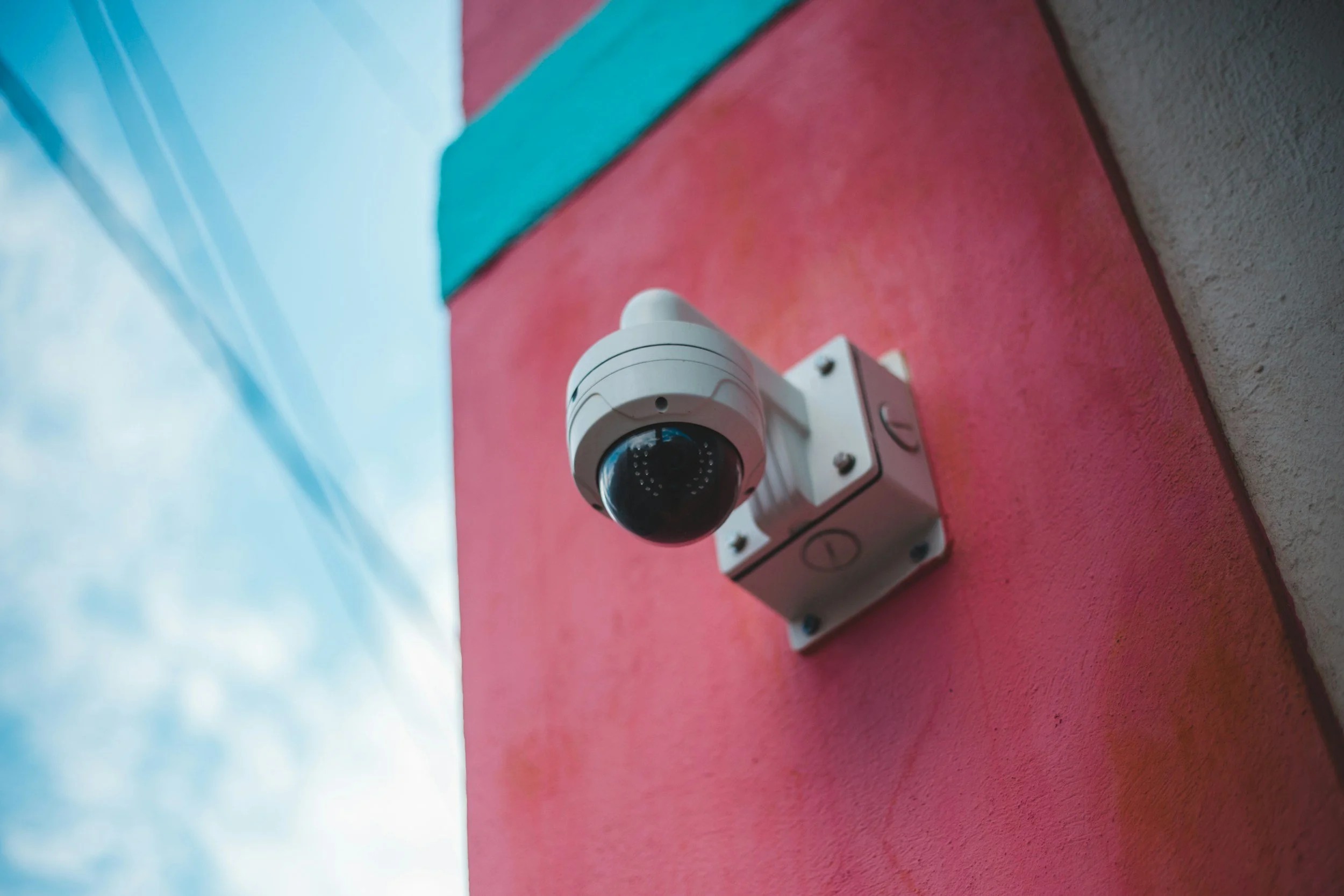
Your CCTV is watching her.
Here's where the law says it has to stop.
Security is legitimate. Dignity is non-negotiable. The line between them is clearer than most households think — and it runs room by room.
The camera nobody talks about
Most Metro Manila households with a kasambahay also have cameras. Almost none have had the conversation about them. Families install CCTV for reasons that are entirely legitimate — package theft, child safety, elderly parents, the front gate at 2 AM. And the person most watched by those cameras is usually the person who lives and works inside the frame all day: the household professional.
The industry avoids this topic because it implicates everyone. We're raising it because both sides deserve to know exactly where the law stands. It turns out the rules are neither vague nor burdensome — they mostly ask for two things: the right locations, and honesty.
Four laws are already in your living room
Republic Act 10361 · Batas Kasambahay
Her privacy is guaranteed — at all times
Section 7 of the Batas Kasambahay states that respect for the privacy of the domestic worker "shall be guaranteed at all times" and extends to her communications and personal effects. This is the foundation: your kasambahay does not surrender her privacy by working in your home. The law treats her private moments, messages, and belongings as protected — everywhere, always.
Source: Republic Act No. 10361 (Lawphil)
RA 10173 · Data Privacy Act + NPC Circular 2024-02
The household exemption — and its edges
The National Privacy Commission's current CCTV rules (NPC Circular No. 2024-02) generally do not regulate cameras used for personal, family, or household affairs. So a purely domestic security camera usually sits outside the NPC's CCTV regime. But the exemption has edges: it can fall away when footage captures beyond the private residence, when it's disseminated widely, or when processing affects people outside the household relationship. A kasambahay lives and works inside the home — so the careful household treats the exemption as a starting point rather than a license, and borrows the Circular's principles anyway: visible notice, a legitimate purpose, proportionate placement, limited access, and disciplined retention. They cost nothing and settle the question.
Republic Act 9995 · Anti-Photo and Video Voyeurism Act
Some rooms carry criminal exposure
RA 9995 criminalizes capturing images of a person's private areas, or of a person undressing, without consent, in circumstances where privacy is reasonably expected. A camera in a bathroom, a changing area, or pointed at the space where your kasambahay sleeps and dresses is where household surveillance stops being a civil-law question and can become a criminal one. The same law criminalizes sharing such material — regardless of who recorded it.
Source: Republic Act No. 9995 (Lawphil)
Republic Act 4200 · Anti-Wiretapping Act
Audio is a different law
Many modern cameras record sound. RA 4200 makes it unlawful to record private communications without authorization from the parties — a law written in 1965 that applies with full force to a microphone your kasambahay doesn't know about. Notice alone is weaker than what the statute asks for: it requires consent, and video and audio surveillance are legally different acts. The safe household position: if your cameras record audio, disclose it and obtain written consent — or disable audio entirely.
Source: Republic Act No. 4200 (Lawphil)
The room-by-room map
Put the four laws together and the map of your own home draws itself:
Where cameras stand — room by room
Disclosure changes everything
Notice is the through-line in all four laws — and it's also just how you'd want to be treated. The strong household practice: tell her on day one, walk her through where the cameras are and why, and put it in writing in the employment agreement. The NPC expects CCTV operators generally to make surveillance visible and known; the same principle inside your home converts the camera from a trap into a shared security measure. Many kasambahay, told plainly, are glad the cameras exist — footage protects the innocent worker from false accusations at least as often as it protects the family.
The footage is her data too
What happens to recordings matters as much as where cameras point. Three disciplines, borrowed from the NPC's playbook and from basic decency: keep footage only as long as its security purpose needs (set a retention habit — many systems overwrite in 15–30 days, which is usually enough); restrict who views it to the adults responsible for household security; and never share clips of her to group chats or social media — including the "funny" ones. Her image at work, in the place where she also lives, is not content. Sharing it can pierce the household exemption, and if a clip is intimate in nature, RA 9995 criminalizes the sharing itself.
Both sides of the door
We screen every candidate we introduce — the Security Double-Lock™, source-verified documents, employer calls — because families deserve verified trust. This essay is the same standard pointed the other way: the professional entering your home deserves verified dignity. Cameras done right serve both. The gate is watched, the child is safe, the worker is protected from false accusations, and nobody is being filmed where they sleep.
Security and dignity were never opposites. In a well-run household, they're the same policy.
Quick answers
Frequently asked
This essay explains Philippine law in plain language for general information. It isn't legal advice, and specific situations — a dispute, an incident, a planned installation you're unsure about — deserve advice from counsel who knows the facts.
"The standard is not perfection. The standard is accountability. Documented. Visible. Lived."
— The Human+ Standard
Questions about running a household well?
Our Care Team works with families on exactly these standards — from placement to the policies that make placements last.
DOLE PEA License M-24-04-034 · Setting the standard since 2009